Buyers who go looking for trouble in a Pequot Lakes purchase agreement usually look in the wrong place. They read the inspection contingency, the earnest money clause, maybe the title commitment twice. What they miss is a form that shows up looking like routine paperwork: the septic compliance inspection. On a lot with lake frontage, that single document does something most buyers do not expect. It quietly decides whether the deck addition or extra bedroom they are already picturing is even legal to build, long before anyone gets to the shoreland ordinance that governs it.
That is the order most guides skip. The rules themselves get plenty of attention. The sequence in which a buyer or seller actually encounters them gets almost none.
A formality that is not one
Minnesota has no statewide law requiring a septic inspection every time a home changes hands. What it does have, since a 2021 change to state septic rules, is a requirement that any tank going through a compliance inspection be pumped empty first, so the inspector can see the tank itself rather than guess at its condition. Once that inspection is done, it is good for three years. A seller can order it well before a purchase agreement exists, and many do, because a compliance certificate on file removes a variable buyers otherwise negotiate around.
In Crow Wing County, that inspection carries more weight than the sale itself. According to the county's own land use permit guidance, anyone applying for a land use permit must submit a site plan, impervious surface calculations, and a current septic system compliance inspection valid within three years, or install a new system, before the county will even process the application. That requirement is not specific to sellers. It applies to anyone who wants to add a bedroom, expand a footprint, or build the deck that made the listing photos work in the first place.
Put those two rules next to each other and the sequence becomes clear. The septic inspection a seller orders to satisfy a buyer's due diligence is the same document a buyer will need later to get a permit for changes to the property. Skip it, let it lapse, or discover a compliance problem after closing, and the renovation timeline moves before the first shovel goes in the ground.
Why this lands harder here than in a typical county sale
Not every Crow Wing County closing runs into this. A landlocked home on municipal sewer rarely does. Pequot Lakes is different because so much of what sells here sits on lake frontage, on lakes like Pelican, Sibley, and Ossawinnamakee, where private septic systems are the rule rather than the exception. A statewide septic guide updated in 2026 notes that shoreland districts near lakes often require advanced treatment systems specifically because of their proximity to water, systems that cost more to install and take longer to design than a standard drainfield. That detail matters for a buyer comparing a lakefront listing to a home three miles inland with the same asking price. The inland home might close with a routine inspection. The lakefront home might need a design from a licensed advanced designer before anyone can talk about a compliance certificate.
The same statewide source puts the typical compliance inspection cost between $400 and $700, depending on the system and how easy the tank is to reach. That number rarely swings a deal by itself. What swings a deal is timing it wrongly, ordering the inspection after an offer is already in place with a tight closing date, only to learn the tank needs to be uncovered, pumped, and rescheduled before anyone can sign off.
The setback question waiting on the other side
Once the septic file is settled, the second friction point in a Pequot Lakes transaction is the one buyers actually expect to hear about: shoreland setbacks. A city staff report on a metes and bounds request within Pequot Lakes, dated September 16, 2025, lays out the specifics that apply to riparian lots inside city limits. Docks must keep their landward end at least 10 feet from the nearest lot line, and no part of a dock, including any L-shaped extension, boat lift, or mooring buoy, can cross that setback line into a neighbor's water access. Waterfront structures generally have to hold a 50-foot setback from the ordinary high water level, though on parcels served by municipal sewer, a new structure can align with an existing structure's setback on either side rather than starting from scratch, provided the site is not in a bluff impact zone.
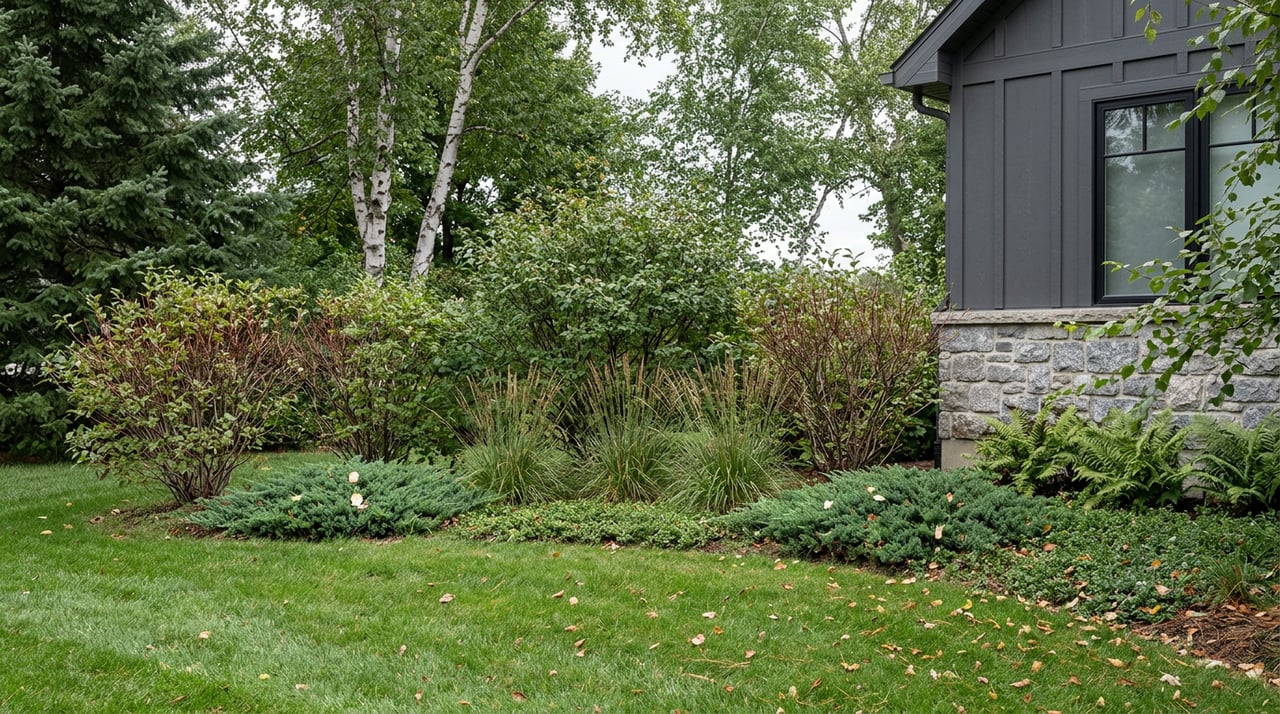
There is also a screening rule that catches people off guard because it has nothing to do with distance. Any lot in the shore impact zone, bluff impact zone, or wetland setback has to keep native trees and shrubs covering at least 75 percent of that area, measured with the trees in full leaf. A buyer who wants an open view corridor to the water has to work within that number, not around it.
None of these figures are unusual by Minnesota shoreland standards. The Minnesota DNR's own shoreland guidance for property owners describes similar statewide baseline setbacks and notes that local ordinances are frequently more restrictive than the state minimum, which is exactly what the Pequot Lakes numbers show. The point is not that these rules are exotic. It is that a buyer who assumes they can sort out setback questions after closing may already be boxed in by the septic answer they got before closing, since a compliance inspection and a land use permit application move through the same county office in sequence, not in parallel.
Who actually does this work
The list of professionals licensed to perform these inspections and installations in Crow Wing County is short, and several of them work out of Pequot Lakes itself. Underground Designs LLC, run by Seth Gravdahl out of an address on Ossawinnamakee Road, holds an installer, designer, and inspector license. Dingman Brothers Excavating and Pequot Sand & Gravel are both based in town as well, each carrying active installer licenses. A buyer or seller can confirm any of these credentials directly through the county's septic professional directory, which lists license numbers and expiration dates alongside contact information.
The reason this list matters is scheduling, not credentials. A handful of licensed advanced designers cover a county with thousands of shoreland properties. A seller who waits until an offer arrives to order an inspection is competing for the same few calendars as every other lakefront listing that hit the market that month.
The order that keeps a contract on schedule
The practical move for a seller is to treat the septic compliance inspection as a pre-listing task, not a post-offer one. Since the certificate holds for three years, ordering it months before a listing goes live means the file is already clean when a buyer's agent asks for it, and it removes a step from the closing timeline entirely.
For a buyer, the move is to ask the question in reverse. Before waiving a contingency on a lakefront property with renovation plans, confirm whether the existing septic system would support what comes next, an added bedroom, a larger footprint, a system already near its rated capacity. That answer shapes whether the Crow Wing County land use permit process moves in ten business days or stalls waiting on a new system design.
FAQ
Does Pequot Lakes require a septic inspection before every home sale? Minnesota has no statewide rule mandating one, and Crow Wing County does not require it purely for a transfer of ownership. It becomes required the moment a new owner applies for a land use permit, since the county asks for a current compliance inspection or a new system as part of that application.
How long is a septic compliance inspection good for? Three years from the date it is completed, which is why sellers who order one early rather than reactively often save time later in the process.
Can I build closer to the water if my neighbors already did? Sometimes. Pequot Lakes allows a new waterfront structure to match an existing structure's setback on either side of the lot, but only on parcels served by municipal sewer and only outside a bluff impact zone. Every site is different enough that it is worth confirming with the city before assuming the answer.
If you are weighing a lakefront purchase in Pequot Lakes and want to know what a specific lot's septic and setback situation actually looks like before you write an offer, Amanda Lumley can walk through it with you. Schedule a consultation and get the sequence right from the start.